
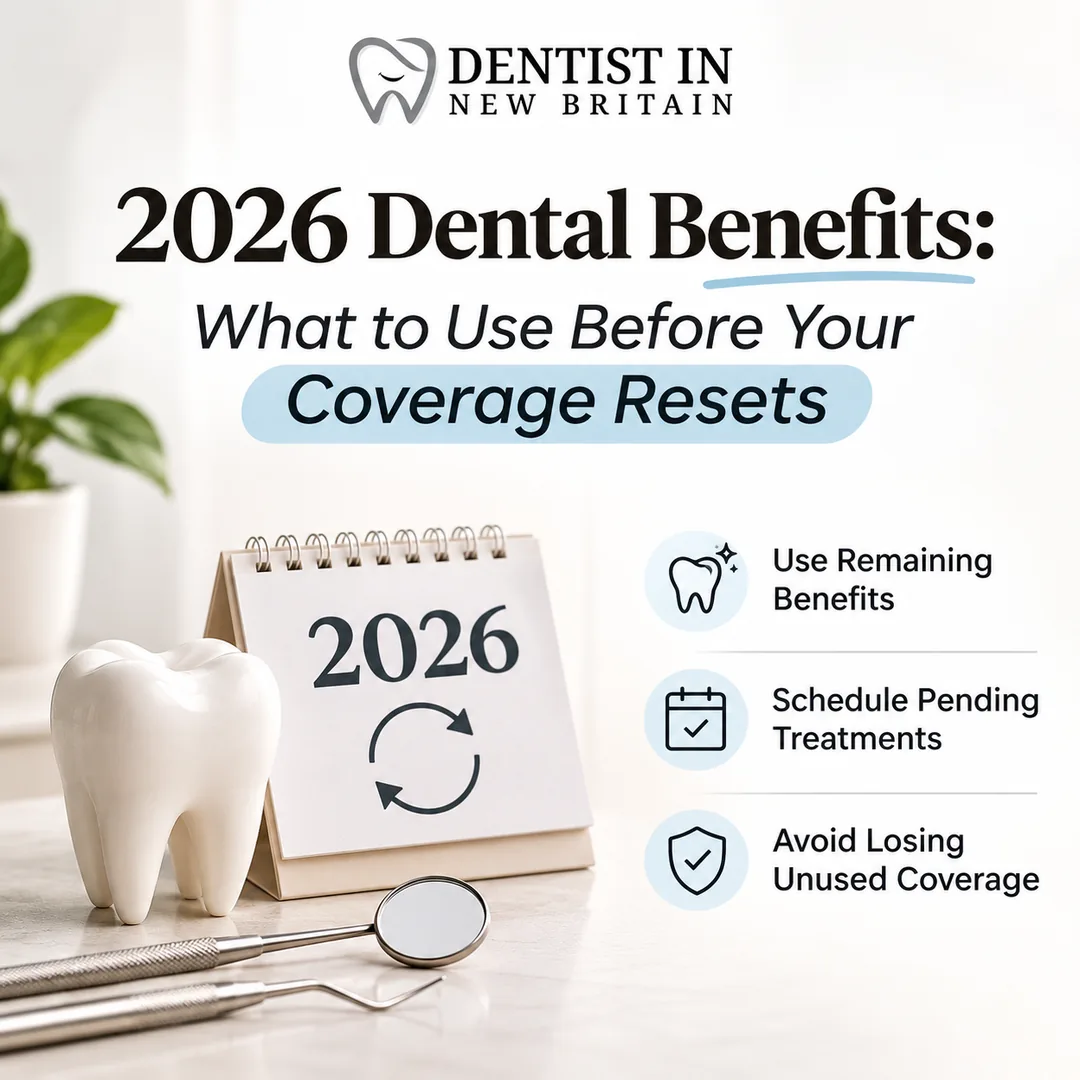
Patients can use remaining 2026 coverage by scheduling care before their plan resets. Many plans reset on January 1, while others reset on December 31. Unused benefits usually do not roll over.
Before booking care, patients should ask their insurer how much coverage remains. Placing a dental implant before year-end may help use remaining 2026 benefits. People comparing the best dental insurance plans should check each plan’s reset date and rules.
An annual maximum caps what a dental plan will pay during its benefit year. The deductible also affects how much coverage remains. Together, these limits show how much of the 2026 benefit a member can still use.
Most plans reset on January 1, while some reset on December 31. Unused benefits usually do not roll over, so any balance may expire at the reset. That balance can help guide which covered services to schedule before coverage ends.
Covered services can save money and improve smiles. Maximize your benefits by using what your plan offers before it resets.
Overdue cleanings, exams, and dentist-recommended X-rays can be scheduled before a plan resets. This can help patients use their remaining 2026 benefits for preventive care.
Most plans reset on January 1, but some reset on December 31. Patients can check with their insurer to see how much coverage remains.
Patients with a recommended filling or extraction can schedule it before their plan resets to use remaining 2026 benefits. The annual maximum and deductible affect how much coverage remains, so patients should check their benefits with the insurer before booking.
After addressing basic procedures like fillings and extractions, it’s time to explore major dental work. Crowns and bridges serve vital roles in restoring smiles. Crowns cover damaged or decayed teeth, helping them look and function better. A dentist often recommends crowns if a tooth has severe damage or has undergone root canal treatment.
Bridges replace missing teeth by anchoring onto surrounding healthy teeth. These restorations help maintain the shape of the face while ensuring proper bite alignment. Many insurance plans allow coverage for these procedures, especially before benefits reset at year-end. Patients can maximize their insurance by scheduling these treatments soon, as they often require multiple visits to complete.
Scheduling dental appointments before the year ends can help patients maximize their insurance benefits. Keeping track of timing ensures they use what’s left of their 2026 coverage.
Maximizing dental benefits requires attention and timing. Patients can take several steps to maximize their coverage before the year ends.
Patients should now consider when to schedule those important dental appointments for their covered services before the benefit reset occurs.
Patients often overlook their dental benefits and miss out on coverage. Many plans reset on January 1 or December 31, so timing matters. Unused benefits typically don’t carry over to the next year.
Those who wait until it’s too late may find themselves scrambling for appointments. Basic services like cleanings and fillings are often forgotten until it's too late. Some individuals discover they have reached their annual maximum too late in the game, leading to unexpected costs.
Reviewing remaining benefits before scheduling procedures helps avoid surprises; therefore, patients should check with their insurer first. Overdue treatments can pile up quickly, leaving people feeling overwhelmed as deadlines approach.
Additionally, some practices offer special deals for new patients using expiring benefits. Patients should not miss opportunities like free exams or X-rays that many offices promote at year-end. Staying informed about what is covered ensures individuals make the best use of their insurance before time runs out!
Book a checkup, cleaning, or needed X-rays before your plan year ends. Preventive care may be covered in full, but check your plan first.
Yes. Your annual maximum is the most your plan pays during the year. If you need a crown or filling, ask your dentist about timing. Unused benefits usually do not roll over.
If your dentist recommends treatment, ask whether you can complete it before the reset. Some plans split costs across two plan years. Your dentist and insurer can explain what your plan covers.
Check your FSA deadline and balance. Some plans let you use the money for eligible dental costs, but rules vary. A quick call now can help you avoid leaving benefits behind.
Tell us a little about what you need — we'll be in touch shortly.
446 S Main St, New Britain CT 06051-3516, USA
Hi! I'm Tooth fairy! Your AI Assistant Ask me anything