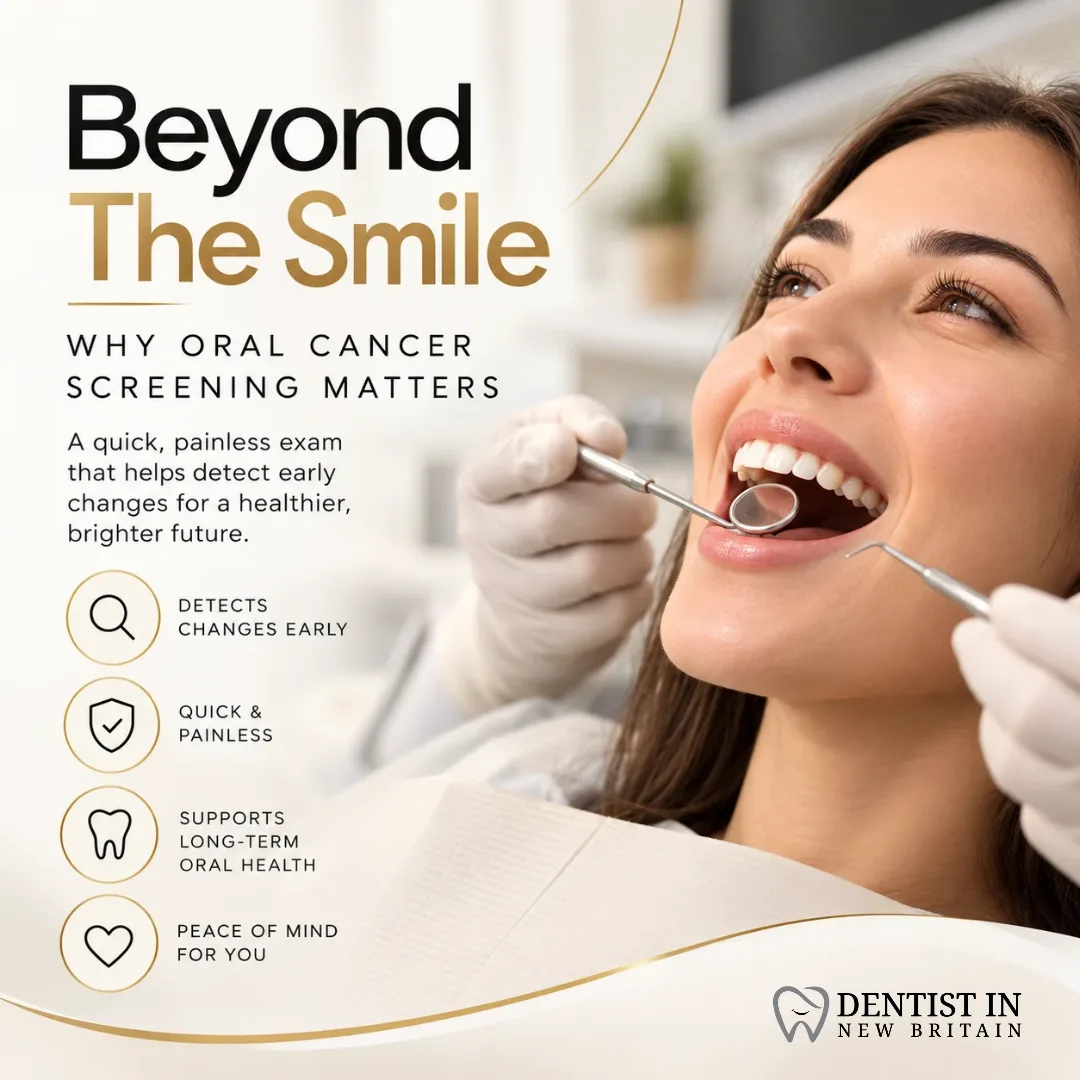
Many people smile and think their mouth is fine. They skip checks that catch more than cavities. This can leave serious problems unseen. A quick talk or a moment of doubt often brings them to look for answers.
Oral Cancer Screening finds trouble early. Early detection raises five-year survival a lot. Here you will know the signs to watch for. It explains how screenings work and who needs them. It gives clear steps a patient can take.
Oral cancer screening is a quick, visual and physical check of the mouth, lips, tongue, gums, and neck during a dental screening. A dentist recalled finding a premalignant white patch during a five-minute check that led to early treatment and a better prognosis.
Routine checks catch malignant lesions and premalignant conditions before symptoms appear. Oral cancer appears more often than people realize, and Stage I detection yields significantly higher five-year survival rates.
Screening takes minimal time, causes no discomfort, and fits into holistic oral health and preventive care.
Oral cancer screening plays a crucial role in saving lives. Early detection can lead to better treatment outcomes and higher survival rates, making it essential for everyone's oral health journey.
Stage I detection gives significantly higher five-year survival rates than later stages. The find stopped a malignant lesion from spreading.
Routine dental screenings catch issues before symptoms appear. Oral cancer can develop with no warning signs, so short exams matter. Screening supports holistic dental care and preventive care.
A quick oral examination can reveal malignant lesions and premalignant conditions. Patients and providers see clear benefits in survival rates and long term oral health.
Following early detection saves lives, routine oral cancer screening can block cancer from reaching advanced stages. Dentists find small, premalignant conditions during five-minute checks. Those findings let clinicians act fast and reduce the chance of spread.
A dentist once spotted a tiny lesion during a regular dental screening, then treated it before it became malignant. Stage I detection raises five-year survival rates dramatically. Screenings take little time, cause no discomfort, and support oral health and preventive care.
Oral cancer screenings significantly boost treatment success rates. Detecting oral cancer at Stage I can increase five-year survival rates dramatically compared to later stages. Early diagnosis opens up more treatment options, making it easier to manage the disease.
Quick and simple screenings during dental visits can catch malignant or premalignant lesions before they worsen.
Routine screenings take only a few minutes and come with no discomfort for patients. These lifesaving exams serve as a crucial part of holistic care in dentistry. By identifying issues early, healthcare providers give their patients a fighting chance against this common but often overlooked disease.
Regular check-ups pave the way for improved long-term outcomes in oral health and overall wellness.
Signs and symptoms of oral cancer can be alarming. Unexplained sores in the mouth may linger longer than usual. Persistent pain or swelling can signal trouble, too. Some individuals might struggle with swallowing or speaking normally.
Early attention to these signs is crucial for effective treatment. For anyone who suspects something isn't right, taking action now can make a big difference!
Unexplained mouth sores can be a sign of oral cancer. These sores may appear without warning and often go unnoticed. Early detection is crucial, as it dramatically improves survival rates.
In fact, stage I oral cancer has significantly higher five-year survival rates compared to later stages. Routine screenings during dental check-ups help catch these lesions before they develop into something serious.
Timely intervention can save lives. Regular visits to the dentist allow for quick identification of potential issues like mouth sores or other changes in the mouth's appearance. Ignoring these signs could lead to advanced stages of cancer, which are much harder to treat.
Staying aware helps maintain overall health and promotes early diagnosis if something seems off in one's oral hygiene routine.
Transitioning from unexplained mouth sores, persistent pain or swelling can be a red flag. These symptoms may indicate potential issues in the oral cavity. Individuals experiencing such discomfort should take these signals seriously.
Persistent pain might stem from various causes, including gum disease or even early signs of cancer. Swelling can also develop around the jaw or neck area, making it hard to swallow or speak comfortably.
Early detection plays a crucial role here; catching oral cancer at Stage I dramatically increases five-year survival rates compared to late-stage diagnoses. Regular screenings allow dentists to address these concerns promptly and effectively before they escalate into more serious conditions.
Difficulty swallowing or speaking can signal serious health problems. These symptoms may arise from oral cancer, which often develops without noticeable signs. When someone struggles to swallow, eating becomes a challenge; conversations feel like a battle. This situation can make daily life tough.
Oral cancer screenings help catch these issues early. A simple five-minute examination during a dental appointment can reveal malignant lesions before they spread. With early detection, the chances of recovery improve significantly; Stage I detection leads to much higher five-year survival rates than later stages.
Regular check-ups are vital for maintaining good oral health and spotting any potential threats in time.
Oral cancer screening begins with a careful look inside the mouth. Dentists examine the oral cavity and check the neck and jaw for any unusual signs. They may also use special tools to spot potential issues early on. This thorough process helps catch problems before they become serious.
Dentists conduct a visual examination of the oral cavity to spot early signs of oral cancer. They look for any unusual sores, lumps, or changes in color that might signal problems.
This quick check can take only a few minutes and causes no discomfort to patients. With routine screenings, dentists can identify malignant lesions before they spread and detect premalignant conditions early.
Patients often underestimate this simple step during their dental visits, yet it plays a crucial role in overall health. A five-minute screening can dramatically improve survival rates if doctors catch the disease in its initial stages.
Statistics show that stage I detection leads to significantly higher five-year survival rates compared to later-stage diagnosis. Regular examinations contribute greatly to maintaining long-term oral health and preventing more serious issues down the line.
Following the visual examination of the oral cavity, the physical examination of the neck and jaw plays a crucial role. Healthcare professionals often perform this step to check for any unusual lumps or swelling.
They feel around the jawline, under the chin, and along both sides of the neck. This simple act can reveal signs of oral cancer that might otherwise go unnoticed.
A five-minute screening during a dental appointment proves effective in identifying malignant lesions early on. It allows healthcare providers to catch potential issues before they escalate into more serious conditions.
Many people underestimate how important this quick exam is in maintaining overall oral health and ensuring timely intervention for cancers at their initial stages.
Adjunctive screening tools play a crucial role in oral cancer detection. These tools help dentists spot issues that a regular visual examination might miss. A five-minute oral cancer screening can identify malignant and premalignant lesions before they worsen. Patients often overlook the significance of these screenings, yet their impact is profound.
Using fluorescence and light technology, dentists can enhance their examinations effectively. These innovations provide clear insights into potential problems lurking in the mouth's tissues.
The straightforward approach supports early detection and improves long-term oral health maintenance significantly. During routine dental visits, these adjunctive tools offer an opportunity for timely intervention without causing discomfort to patients.
Certain groups should pay close attention to oral cancer screening. Smokers and heavy drinkers top the list, as do those with a family history of cancer.
High-risk individuals face a greater chance of developing oral cancer. Smokers and heavy drinkers sit at the top of this list. These habits increase exposure to harmful substances that can lead to malignant lesions in the mouth.
Regular oral cancer screenings are essential for them. Screening can catch issues early, before they turn serious.
For instance, catching cancer in its initial stages dramatically boosts survival rates. Stage I detection often results in much higher five-year survival statistics compared to later-stage detection.
Oral cancer can lurk silently, growing without noticeable signs; thus, routine check-ups become invaluable for these high-risk groups. They should prioritize screenings during dental visits for better outcomes and peace of mind regarding their oral health.
Individuals with a family history of cancer face increased risks for various types of this disease. Routine screening becomes crucial for these individuals. Early detection significantly improves survival rates, especially during the initial stages of oral cancer.
For example, catching the disease early boosts five-year survival rates compared to later-stage detection.
A friend once shared how her mother battled cancer that started in her mouth. Her mother ignored early signs because they seemed minor at first. A simple screening could have made a difference.
Regular oral screenings can identify malignant and premalignant lesions before they escalate into serious problems. This preventive measure should not be underestimated; it can save lives and improve long-term health outcomes for those at higher risk due to family medical histories.
New tools are changing the game in oral cancer detection. Technologies like fluorescence and light help doctors spot issues earlier than traditional methods. Enhanced biopsy techniques make it easier to identify malignant lesions and premalignant conditions. These advancements pave the way for better patient outcomes and higher survival rates.
Fluorescence and light technology play a crucial role in detecting oral cancer. These advanced methods help identify malignant lesions early, making them essential tools in routine screenings.
A five-minute screening during a dental visit can reveal potential issues that might go unnoticed otherwise. The bright light highlights abnormal areas that may indicate early-stage cancer or premalignant conditions.
Patients often appreciate how non-invasive this technology is. It requires no special preparation and causes little to no discomfort. Regular use of these methods can increase early detection rates significantly, ultimately improving survival odds for those affected by oral cancer. Patients should embrace these screenings as vital components of their overall dental care.
Enhanced biopsy techniques play a significant role in oral cancer detection. These methods help identify malignant lesions at earlier stages, improving survival rates tremendously.
For instance, detecting stage I oral cancer can lead to significantly higher five-year survival rates compared to later-stage diagnoses. Quick and simple procedures during dental visits allow professionals to uncover potential issues before they escalate.
New technologies also aid in the accuracy of biopsies. Medical teams use tools that provide clearer images and better insights into suspicious areas within the mouth. A five-minute examination can spotlight early signs of both malignant and premalignant conditions, which many people might overlook.
This quick step supports patients' overall health while ensuring they receive thoughtful preventive care on schedule.
Oral cancer screening helps catch problems early. Early detection can save lives. It allows for quick treatment and better outcomes.
You should get screened at least once a year, especially if you smoke or drink alcohol regularly. Regular check-ups keep your mouth healthy and reduce risks.
During the screening, a dentist will look inside your mouth for any unusual spots or lumps. They may also feel around your neck and jaw to check for abnormalities.
Yes! Good habits like not smoking, limiting alcohol, and practicing good dental hygiene can lower your risk of developing oral cancer significantly.
Tell us a little about what you need — we'll be in touch shortly.
446 S Main St, New Britain CT 06051-3516, USA

Hi! I'm Tooth fairy! Your AI Assistant Ask me anything