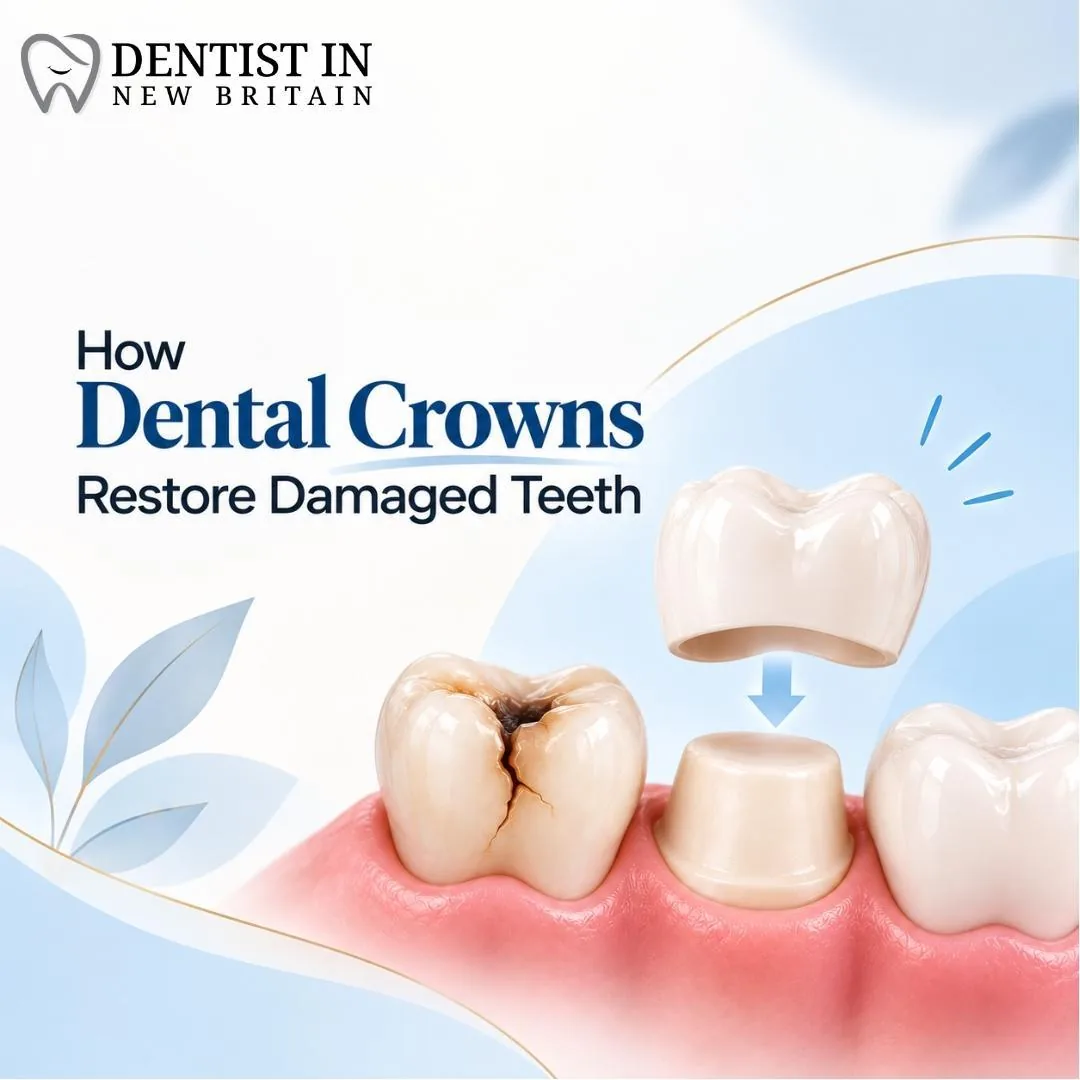
Many people face pain or trouble from a cracked, worn, or decayed tooth. A damaged tooth can hurt chewing, harm oral health, and hurt a smile. Patients often look for tooth restoration or a dental procedure that protects enamel and stops decay.
A Dental Crown is a tooth-shaped cap that restores a decayed, broken, weak, or worn-down tooth. Dentists place crowns after root canals and over implants to add protection and strength. Here you will know how crowns repair teeth, how the crown placement works, the types of crowns, and what to expect during recovery.
Dental crowns play a vital role in restoring damaged teeth. They strengthen and protect weakened structures while enhancing both appearance and function.
A dental crown acts as a protective cap that strengthens weakened or decayed teeth. It covers the entire tooth, providing necessary support and restoring its shape. Crowns help protect against further damage when fillings are not enough. They hold the remaining tooth structure together, preventing additional decay.
Dentists often use crowns for broken or fractured teeth. By placing a crown on such teeth, patients regain normal function while enhancing their oral health. The process typically requires two to three weeks for a customized crown to be created. During this time, patients receive a temporary crown to safeguard their damaged tooth until the permanent one is ready for placement.
Dental crowns play a vital role in restoring broken, worn, or severely damaged teeth. They act as protective caps that cover the entire tooth, helping to restore its strength and shape.
Crowns hold the remaining tooth structure together and prevent further damage from occurring. Patients with fractured or weakened teeth benefit greatly from crowns, as they allow the tooth to function normally again.
Tooth restoration through dental crowns gives patients renewed confidence in their smiles. The process of getting a crown takes about two to three weeks because dentists customize each one for optimal fit.
During this waiting period, patients receive a temporary crown that safeguards their tooth until placement of the permanent solution. This careful approach ensures lasting protection against decay and other complications associated with damaged teeth.
Restoring broken, worn, or severely damaged teeth leads to another important role of dental crowns. These crowns provide essential support for teeth after root canals or dental implants. After a root canal, the tooth often becomes weak and vulnerable. A crown covers the tooth completely, protecting it from further damage while allowing it to function normally.
Similarly, crowns also play a crucial part in supporting dental implants. They attach securely on top of implants and restore both strength and appearance. Crowns hold remaining tooth structure together and prevent further decay by acting as protective caps over weakened or damaged teeth. This restoration process ensures that patients maintain good oral health while enjoying improved dental aesthetics.
Dental crowns improve both the appearance and function of damaged teeth. These tooth-shaped caps completely cover a weak, broken, or worn-down tooth. By doing so, they restore the tooth's natural shape and enhance its look. Crowns provide strength and stability to weakened structures while allowing patients to chew normally again.
These dental restorations also prevent further decay by acting as protective covers over vulnerable areas. They are vital in cases where fillings alone may not be enough to support the tooth structure. Overall, crowns significantly benefit oral health through effective restoration methods.
The dental crown procedure involves several key steps that prepare the tooth for restoration. A dentist will first assess the damaged tooth and take impressions to create a custom-fit crown.
They then place a temporary crown while the permanent one is being made. After the permanent crown arrives, the dentist will bond it securely to restore function and aesthetics. Patients can expect some sensitivity during recovery, but proper care will maintain their oral health after this important dental procedure.
Patients start the dental crown process with a consultation. During this appointment, dentists assess the condition of the tooth. They determine whether a crown is necessary for restoration. If deemed suitable, the dentist prepares the affected tooth by removing any decay and shaping it to fit a crown.
Next, dentists take impressions of the prepared tooth. These impressions help create a customized dental crown that fits perfectly. It typically takes about two to three weeks for labs to fabricate the permanent crown.
To protect teeth during this waiting period, patients receive a temporary crown; it covers and safeguards their damaged tooth until they return for final placement. After ensuring proper fit and appearance, dentists bond the permanent crown securely in place, restoring both strength and function to the patient’s oral health.
Dental crowns come in various types and materials. Each type serves specific needs for tooth restoration. Porcelain crowns match natural tooth color and offer great aesthetics for front teeth. Metal crowns provide strength, making them ideal for back teeth where biting pressure is high. Some dentists use a combination of these materials, blending durability with appearance.
Materials also vary based on the crown type. Common options include porcelain-fused-to-metal, all-ceramic, and gold alloys. Crowns protect damaged or weakened teeth while restoring their function and appearance. Dentists customize each crown to fit securely over the remaining tooth structure, ensuring proper bonding and protection against decay.
After receiving a dental crown, patients can expect some sensitivity around the treated area. This may occur for a few days as the tooth adjusts to the new crown. A temporary crown protects the tooth while waiting for a customized one, which usually takes two to three weeks to create. During recovery, individuals should avoid hard foods that could damage the temporary crown.
Long-term care involves practicing good oral hygiene. Regular brushing and flossing will keep both natural teeth and crowns healthy. Crowns act as protective caps over damaged or weakened teeth; they help restore strength and shape while preventing further decay. Patients should visit their dentist regularly for check-ups to ensure optimal restoration of oral health remains intact.
A crown restores tooth structure and gives protection. This dental procedure covers a weak or broken tooth. It acts as tooth restoration and aids tooth repair. It supports oral health and long term dental care.
Dentists pick a crown for deep tooth decay or heavy enamel loss. They use crowns after big decay or when a tooth needs more protection. Crown use fits restorative dentistry and some cosmetic dentistry cases.
The dentist trims the tooth, shapes the tooth structure, and fits a temporary crown. Then they test fit and use bonding during final crown placement. This dental procedure makes the dental restoration secure.
A crown restores the tooth form and bite. It improves dental aesthetics and lets you chew well. It supports oral health and the whole tooth restoration plan.
Yes, crowns protect weak areas from new decay. They cover exposed enamel and guard the tooth structure. Good dental care keeps the crown and the tooth healthy.
Dental specialists in prosthodontics or general dentists do crown work. They follow dental procedures for crown placement and tooth repair. Care includes daily brushing, flossing, and regular dental visits. If you have a temporary crown, follow your dentist notes until the final crown fits.
Tell us a little about what you need — we'll be in touch shortly.
446 S Main St, New Britain CT 06051-3516, USA

Hi! I'm Tooth fairy! Your AI Assistant Ask me anything