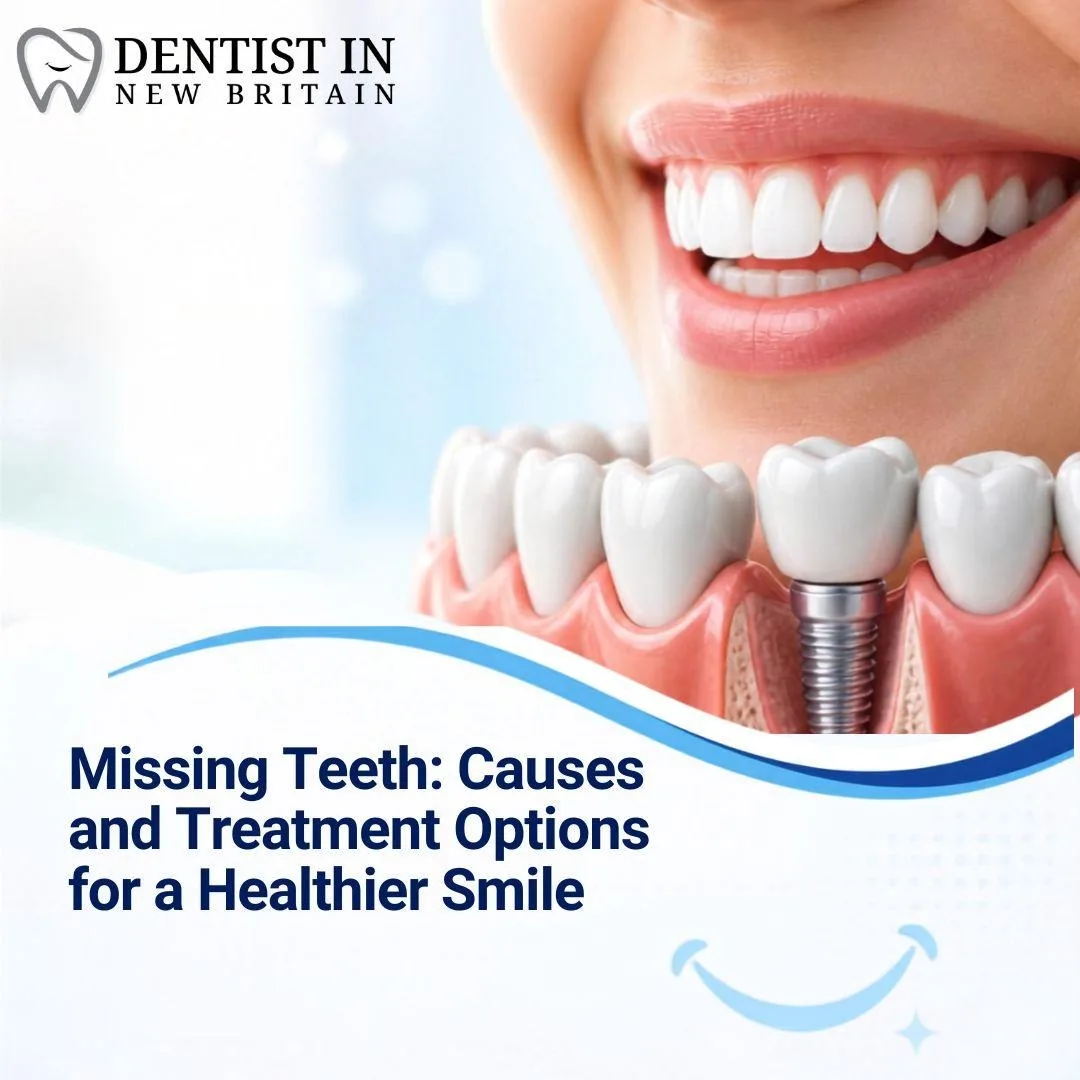
Many people worry about a gap in their smile. Missing teeth can make chewing hard and lower confidence, and they often raise bigger questions about tooth loss and oral health. The good news: there are clear, proven options for tooth replacement and dental restoration.
Gum disease is the number-one cause of tooth loss around the world. And when a tooth goes missing, nearby teeth can shift and cause bite problems and jaw trouble. At Dentist in New Britain, we help patients weigh their options — dental implants, dental bridges, and partial or complete dentures — so they can make the right choice for their smile.
Tooth loss can happen for several reasons. Cavities, tooth decay, and gum disease cause significant damage to teeth — and gum disease is the primary reason for tooth loss worldwide. Smoking raises the risk of losing teeth, and injuries can result in missing teeth as well.
Missing teeth affect oral health and overall well-being. Surrounding teeth may shift into the gap, causing misalignment in the bite. That misalignment often leads to problems with jaw function and chewing ability.
A missing tooth also means the jawbone no longer receives stimulation from the root, which can lead to bone deterioration over time. And chewing difficulties can negatively impact diet and nutrition, too. That's why dental professionals recommend seeking treatment for missing teeth early — for both oral health and smile aesthetics.
Many treatments can restore a healthy smile:
Dental implants offer an effective, long-lasting solution for tooth replacement. They mimic natural teeth and help preserve jawbone health. Dentists place them directly into the jawbone, providing strong, stable support.
A dental bridge is a popular choice for replacing missing teeth. A bridge fills the gap by anchoring onto the adjacent teeth.
Partial dentures provide another option for those with multiple missing teeth. These removable prosthetics improve chewing ability and maintain facial aesthetics, and complete dentures can replace a full arch.
Each of these treatments aims to restore function and appearance while protecting your long-term oral health.
Maintaining a healthier smile starts with good oral hygiene. Brushing twice daily and flossing regularly helps prevent tooth decay and gum disease — the two leading causes of tooth loss. Routine dental exams and cleanings help catch issues early.
If you're already missing one or more teeth, don't wait — the sooner a gap is treated, the easier it is to protect the surrounding teeth and bone. Call 860-259-4141 to schedule a consultation at Dentist in New Britain.
Tooth loss most often comes from tooth decay and gum disease, and poor oral hygiene raises the risk. Injury and genetics also cause missing teeth. Long neglect can even leave a person without any natural teeth.
Treating missing teeth protects your oral health, restores chewing function, and improves your smile's appearance. It also stops nearby teeth from shifting and prevents further tooth loss.
You can choose dental implants, a dental bridge, or partial or complete dentures. Your dentist will suggest the best tooth replacement for your situation.
Dental restoration fixes broken or missing teeth using crowns, bridges, implants, or dentures to restore chewing and looks. Cosmetic dentistry focuses on appearance and smile restoration.
Keep up strong daily oral hygiene — brush and floss carefully around restorations — and see your dentist for regular cleanings to prevent gum disease and tooth decay.
Start with a dentist for an exam and treatment planning. Some cases call for a specialist for dental implants or complex restorations. Talk with your dental team about which option is right for a healthier smile.
Nearby teeth drift into the gap, which throws off your bite and can cause problems with jaw function and chewing. The jawbone under the space also stops receiving stimulation from a tooth root, which can lead to bone deterioration over time. Chewing difficulties can affect diet and nutrition too, so treating the gap early is easier on the surrounding teeth and bone.
Gum disease is the primary reason for tooth loss worldwide. Cavities and untreated tooth decay are close behind, and smoking raises the risk further. Injuries and accidents account for many missing teeth as well. Because most of these causes build up quietly over years, regular exams and cleanings are the most reliable way to catch problems before a tooth is lost.
An implant is placed directly into the jawbone and acts as a replacement root, so it supports the new tooth on its own and helps preserve jawbone health. A bridge instead fills the gap by anchoring onto the adjacent teeth. Both restore chewing and appearance, and which one suits you depends on the number of missing teeth and the health of the neighboring teeth and bone.
Yes. Partial dentures are removable prosthetics designed for patients missing several teeth, and complete dentures can replace an entire arch. Both improve chewing ability and help maintain facial aesthetics. They need daily cleaning and regular dental visits so the gums underneath stay healthy. Your dentist can compare them with implants and bridges during an exam.
Care for restorations the same way you care for natural teeth, with extra attention around the edges. Brush twice daily with fluoride toothpaste and floss carefully around crowns, bridges, and implants where plaque collects. Limit sugary snacks, avoid tobacco, and keep professional cleanings every six months so gum disease and decay do not undermine the work.
Tell us a little about what you need — we'll be in touch shortly.
446 S Main St, New Britain CT 06051-3516, USA
Hi! I'm Tooth fairy! Your AI Assistant Ask me anything